
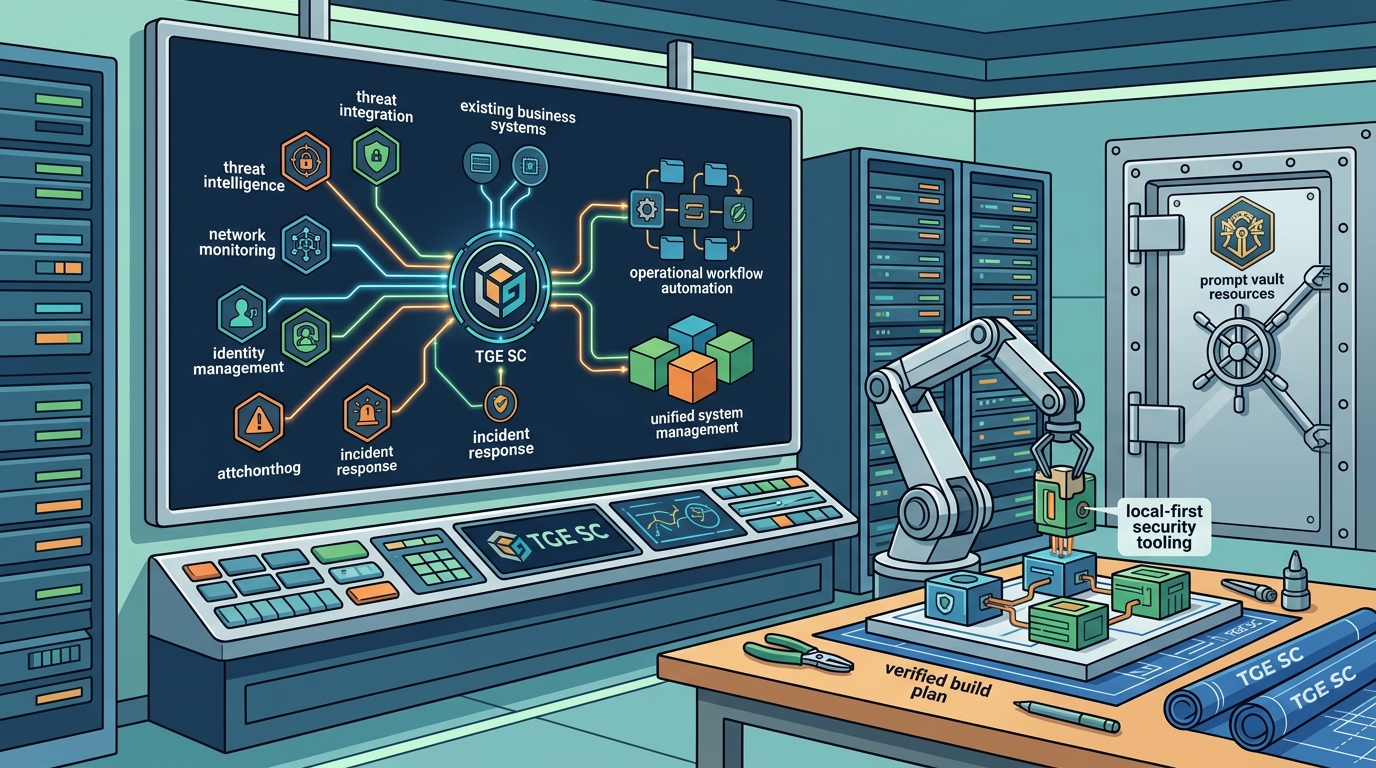
Choosing the right security platform requires verifying how it integrates with existing business systems to improve operational efficiency. TGE SC. provides local-first, offline-capable security tooling designed to eliminate telemetry and subscription dependencies. This guide covers security platform integration, operational workflow automation, and unified system management. It explains how to evaluate tools that respect data sovereignty while streamlining technical operations.
Security Platform Integration
Security platform integration is the process of connecting security tools with existing enterprise infrastructure to ensure consistent data flow and policy enforcement. Effective integration reduces the risk of data silos and configuration drift. It allows security teams to monitor and manage assets without relying on external cloud dependencies. For additional details, review the .
Local-First Architecture
Local-first architecture is a design pattern where applications function fully offline and synchronize data only when necessary. This approach is critical for environments with strict data sovereignty requirements. TGE SC. builds its products with this philosophy, ensuring that security tools operate independently of internet connectivity. This design prevents vendor lock-in and eliminates the security risks associated with constant phone-home telemetry. For additional details, review the Customer Experience.
Evaluating Integration Capabilities
Operational Workflow Automation
Operational workflow automation is the use of software to execute repetitive security tasks without manual intervention. This practice reduces human error and accelerates response times to potential threats. By automating routine checks, security teams can focus on strategic analysis and complex incident resolution. For additional details, review the Frequently Asked Questions.
Eliminating Subscription Dependencies
Many commercial security tools rely on subscription models that introduce recurring costs and potential service interruptions. TGE SC. addresses this by offering standalone products that do not require ongoing payments for basic functionality. This model provides predictable operational costs and ensures that critical security tools remain available even if a vendor changes its business model. It also removes the need for continuous telemetry, which can be a privacy concern for sensitive environments. For additional details, review the About.
Streamlining Deployment Strategies
Automation extends to the deployment of security policies across multiple nodes. A well-designed platform should allow administrators to push configurations to all managed devices simultaneously. This capability is vital for maintaining consistency in large-scale environments. It ensures that every endpoint adheres to the same security standards, reducing the attack surface and simplifying compliance audits.
Unified System Management
Unified system management is the consolidation of multiple security tools and monitoring systems into a single interface. This approach provides a holistic view of the security posture across the entire organization. It simplifies administration by reducing the number of distinct dashboards and login credentials required by IT staff.
Reducing Configuration Errors
Fragmented security tools often lead to configuration errors due to inconsistent interfaces and documentation. A unified management layer helps mitigate this risk by standardizing the user experience. TGE SC. focuses on building tools that are intuitive and easy to maintain. This reduces the training burden on new team members and minimizes the likelihood of misconfigurations that could compromise system integrity.
Enhancing Operational Efficiency
By integrating various security functions into a cohesive suite, organizations can improve their overall operational efficiency. This consolidation allows for better resource allocation and faster decision-making. It enables security teams to identify patterns and anomalies more quickly, leading to proactive rather than reactive security management. The result is a more resilient and efficient IT infrastructure.
Key Takeaways
- Local-first architecture ensures security tools function offline, protecting data sovereignty.
- Eliminating telemetry and subscriptions reduces privacy risks and operational costs.
- Operational workflow automation minimizes human error in repetitive security tasks.
- Unified system management consolidates tools into a single interface for easier administration.
- Standalone products prevent vendor lock-in and ensure long-term availability.
- Transparent configuration options are essential for verifying integration compatibility.
- Reducing configuration errors through standardized interfaces improves overall security posture.
- Proactive security management is achieved through holistic monitoring and unified dashboards.
Frequently Asked Questions
What is local-first security tooling?
Local-first security tooling is software designed to operate fully offline and store data locally on the user's device. This approach ensures that security functions remain available without an internet connection and prevents data from being sent to external servers.
How does TGE SC. handle telemetry?
TGE SC. products are built with zero telemetry calls. This means the tools do not send usage data or diagnostic information to the vendor, ensuring complete privacy and data control for the user.
Why is subscription-free security important?
Subscription-free security is important because it eliminates recurring costs and the risk of service interruption if a subscription lapses. It also prevents the vendor from using the tool as a data collection mechanism, which is a common concern with subscription-based models.
Can security platforms integrate with existing business systems?
Yes, security platforms can integrate with existing business systems by supporting standard protocols and offering transparent configuration options. This allows them to monitor and manage assets without requiring proprietary agents that may conflict with current infrastructure.
What is the benefit of unified system management?
The benefit of unified system management is the consolidation of multiple security tools into a single interface. This simplifies administration, reduces the training burden, and provides a holistic view of the organization's security posture.
How does automation improve operational efficiency?
Automation improves operational efficiency by executing repetitive security tasks without manual intervention. This reduces human error, accelerates response times, and allows security teams to focus on strategic analysis rather than routine maintenance.
What role does data sovereignty play in security platform selection?
How can organizations reduce configuration errors in security tools?
Organizations can reduce configuration errors by using unified system management interfaces that standardize the user experience. This consistency helps administrators apply configurations correctly across all managed devices, minimizing the risk of misconfigurations.