
Small businesses in the USA face a disproportionate share of cyber threats, with 43% of attacks targeting them despite limited defensive resources. TGE SC. provides veteran-owned, local-first security tooling designed to help operators secure their environments without relying on opaque cloud subscriptions. This guide covers the six most common vulnerabilities: phishing, password management, unpatched software, ransomware, cloud misconfiguration, and employee training gaps. For additional details, review the .
Phishing Attacks
Phishing is a social engineering attack where cybercriminals impersonate trusted entities to steal credentials or deploy malware. It remains the primary initial access vector for small business breaches. According to the NIST Small Business Cybersecurity Corner, phishing is a critical risk area that requires consistent mitigation strategies. For additional details, review the Customer Experience.
Types of Phishing
Defensive Measures
Implementing multi-factor authentication (MFA) significantly reduces the impact of credential theft. Email filtering solutions can block known malicious domains. Users must be trained to verify sender identities and inspect URLs before clicking. TGE SC. emphasizes offline-capable tools that do not rely on cloud-based email filtering, ensuring security persists even during network outages. For additional details, review the Frequently Asked Questions.
Password Management
Password management is the practice of creating, storing, and using strong credentials securely. Weak or reused passwords are a leading cause of account compromise. A report by RiskBased Security highlighted that billions of records are exposed annually due to data breaches, many stemming from poor credential hygiene. For additional details, review the About.
Common Mistakes
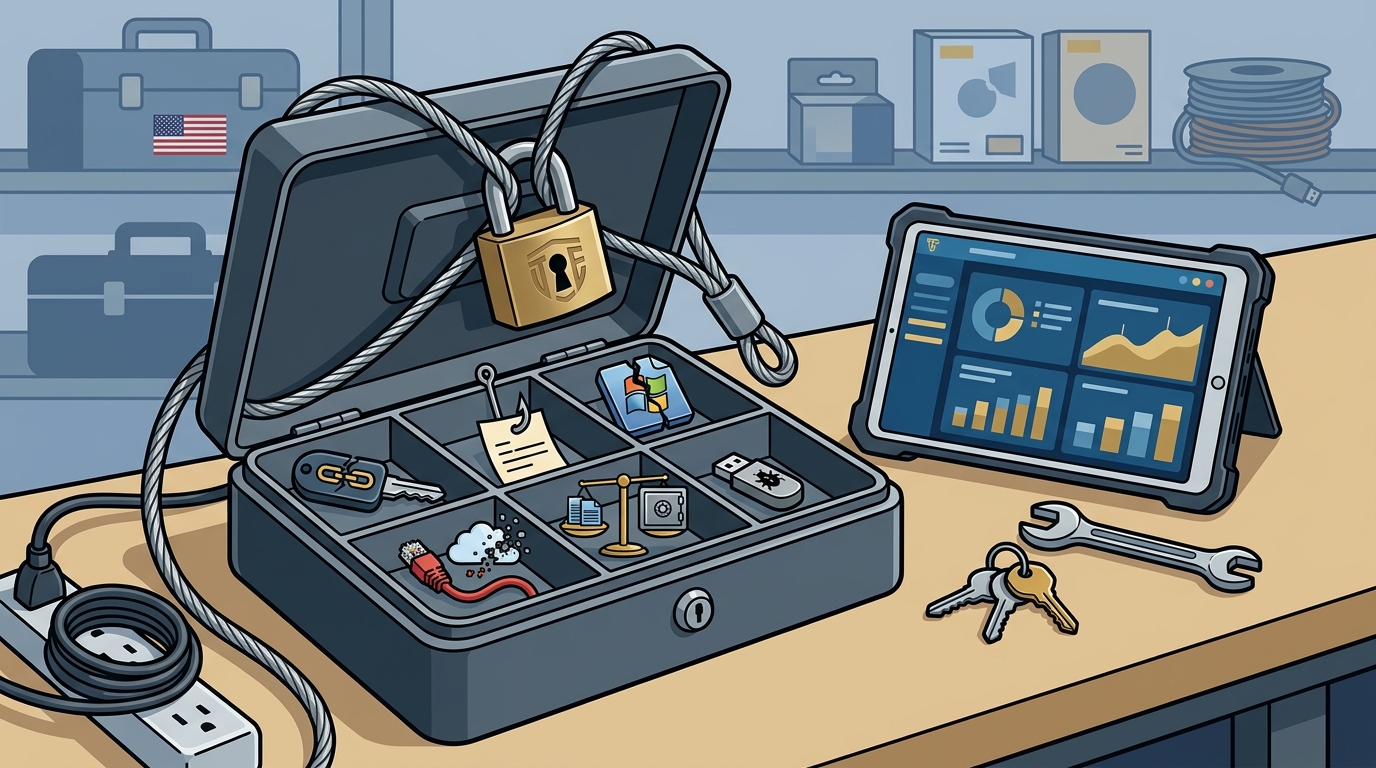
Users often reuse passwords across multiple platforms. They store credentials in plain text files or browser memory. They use predictable patterns like "Password123". These habits allow attackers to use credential stuffing techniques to access multiple accounts after a single breach.
Best Practices
Use a dedicated password manager to generate and store unique, complex passwords. Enable MFA for all critical accounts. Rotate passwords regularly, especially after suspected breaches. TGE SC. offers local-first security tooling that helps operators manage credentials without sending sensitive data to third-party servers, aligning with a zero-telemetry philosophy.
Unpatched Software
Unpatched software is a system or application that has not received the latest security updates from the vendor. These gaps allow attackers to exploit known vulnerabilities. The CISA 2023 Top Routinely Exploited Vulnerabilities advisory lists specific CVEs that are frequently targeted by malicious actors.
Why Patches Matter
Vendors release patches to fix security flaws. Delaying installation leaves systems exposed. Attackers scan for known vulnerabilities and deploy exploits automatically. Small businesses often lack dedicated IT staff to manage updates, making this a critical risk.
Management Strategies
Establish a patch management policy that prioritizes critical updates. Automate updates where possible. Maintain an inventory of all software and hardware assets. TGE SC. focuses on offline-capable tools that can be updated locally, reducing dependency on internet connectivity for security maintenance.
Ransomware
Ransomware is malicious software that encrypts files or locks systems, demanding payment for restoration. It is one of the most devastating threats to small businesses. The CISA Cyber Guidance for Small Businesses notes that small businesses often lack the resources to defend against such attacks.
Attack Vectors
Ransomware typically enters via phishing emails, unpatched software, or remote desktop protocol (RDP) exposure. Once inside, it spreads laterally across the network. Attackers may also exfiltrate data before encryption, threatening to publish it if the ransom is not paid.
Prevention and Recovery
Implement regular, offline backups of critical data. Segment networks to limit lateral movement. Disable RDP if not needed, or secure it with MFA. Have an incident response plan in place. TGE SC. advocates for local-first architectures that minimize cloud dependencies, reducing the attack surface for ransomware propagation.
Cloud Misconfiguration
Cloud misconfiguration is the incorrect setup of cloud services, leading to unauthorized access or data exposure. As small businesses adopt cloud tools, misconfigurations become a common vulnerability. The SBA Cyber Safety Tips highlight the need for proper security settings in cloud environments.
Common Errors
Publicly accessible storage buckets are a frequent issue. Weak access controls allow unauthorized users to modify data. Lack of encryption at rest or in transit exposes sensitive information. Overly permissive roles grant excessive privileges to employees or services.
Securing the Cloud
Conduct regular audits of cloud configurations. Use infrastructure as code to enforce security policies. Implement least privilege access controls. Monitor for unusual activity. TGE SC. provides tools that operate offline, offering an alternative to cloud-dependent security solutions for teams concerned about data sovereignty and telemetry.
Employee Training
Employee training is the process of educating staff on security best practices and threat recognition. Human error remains a significant factor in security breaches. The NIST Small Business Cybersecurity Corner emphasizes the importance of ongoing education for small business teams.
Training Components
Regular phishing simulations help identify vulnerable users. Security awareness modules cover topics like password hygiene and data handling. Incident reporting procedures ensure employees know how to respond to suspicious activity. Training should be continuous, not a one-time event. according to Cybersecurity Risks NIST
Culture of Security
Key Takeaways
- Phishing is the most common initial attack vector for small businesses.
- Weak password practices lead to credential stuffing and account compromise.
- Unpatched software exposes systems to known vulnerabilities.
- Ransomware demands payment and can cripple operations.
- Cloud misconfigurations often result in data exposure.
- Employee training is essential for reducing human error.
- Local-first, offline-capable tools can enhance security without cloud dependencies.
- Regular audits and backups are critical for recovery.
Frequently Asked Questions
What is the most common cyber threat to small businesses?
Phishing is the most common initial attack vector, often leading to credential theft or malware deployment.
How can small businesses prevent ransomware attacks?
Implement regular offline backups, patch software promptly, and segment networks to limit lateral movement.
Why is password management important?
Strong, unique passwords prevent credential stuffing and reduce the risk of account compromise.
What is cloud misconfiguration?
Cloud misconfiguration is the incorrect setup of cloud services, leading to unauthorized access or data exposure.
How often should employees receive security training?
Security training should be continuous, with regular phishing simulations and updates on new threats.
Do local-first tools offer better security than cloud-based solutions?
Local-first tools can reduce the attack surface by minimizing cloud dependencies and telemetry, but they require careful local management.
What is the role of multi-factor authentication (MFA)?
MFA adds an extra layer of security, making it harder for attackers to gain access even if passwords are compromised.
How can small businesses manage patching without dedicated IT staff?
Automate updates where possible and prioritize critical patches. Consider using local-first tools that simplify maintenance.
Conclusion
Small businesses in the USA face significant cybersecurity challenges, but proactive measures can mitigate these risks. By addressing phishing, password management, unpatched software, ransomware, cloud misconfiguration, and employee training, organizations can build a robust defense. TGE SC. offers veteran-owned, local-first security tooling that supports these efforts without relying on opaque cloud subscriptions. To explore how TGE SC. can help secure your environment, visit our website.