
Small business codebases face unique security risks that standard enterprise tools often miss. TGE SC provides specialized, offline-capable security tooling designed to identify credential leaks and configuration errors without relying on cloud telemetry. This guide explains how professional credential audits work, why local-first assessment is critical for small teams, and how to evaluate code quality alongside security posture. We cover the specific services available, the assessment methodology, and the practical steps to secure your infrastructure. For additional details, review the .
Codebase Audit Services
Codebase audit services are comprehensive reviews of source code, configuration files, and deployment scripts to identify security vulnerabilities and operational inefficiencies. For small businesses, these audits are critical because they often lack the dedicated security teams found in larger enterprises. TGE SC approaches these audits with a local-first philosophy, ensuring that sensitive code data never leaves the client's environment. This approach eliminates the risk of data exfiltration during the audit process itself. For additional details, review the Customer Experience.
The Local-First Advantage
Traditional cloud-based security scanners require uploading code to third-party servers. This creates a significant attack surface and raises privacy concerns. TGE SC tools operate entirely offline, meaning the audit process is contained within your own infrastructure. This is particularly important for industries with strict compliance requirements or for businesses handling sensitive customer data. The offline capability ensures that zero telemetry calls are made during the assessment, preserving operational security. For additional details, review the Frequently Asked Questions.
Scope of the Audit
A professional audit typically covers several key areas. First, it examines hardcoded credentials and API keys. Second, it reviews dependency libraries for known vulnerabilities. Third, it assesses configuration files for insecure defaults. By focusing on these areas, the audit provides a clear picture of the current security posture. The goal is not just to find bugs, but to provide actionable remediation steps that small teams can implement without extensive training. For additional details, review the About.
Credential Security Assessment
Credential security assessment is the process of identifying, classifying, and validating the management of authentication secrets within a codebase. This is often the most critical component of a security audit because leaked credentials are a primary vector for data breaches. TGE SC specializes in detecting opaque permissions and credential leaks that standard linters might miss. The assessment focuses on how secrets are stored, transmitted, and accessed throughout the application lifecycle.
Identifying Hardcoded Secrets
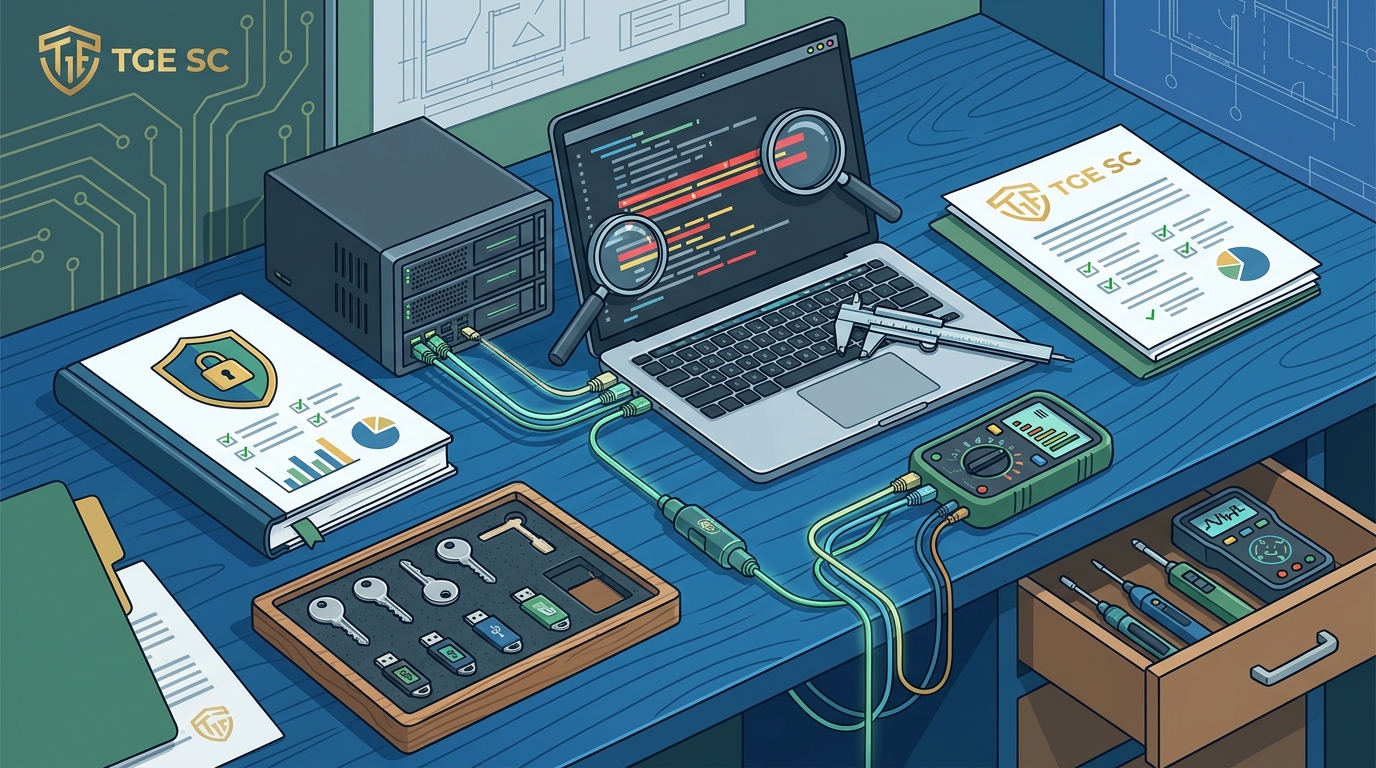
Hardcoded secrets are one of the most common security flaws in small business codebases. Developers often commit API keys, database passwords, or encryption tokens directly into source code for convenience. TGE SC tools scan for these patterns using advanced heuristics that go beyond simple regex matching. The system identifies not just the presence of a secret, but also the context in which it is used. This helps prioritize remediation efforts based on the potential impact of a leak.
Permission and Access Review
Assessing permissions is equally important. Many applications request more permissions than they actually need, creating unnecessary risk. TGE SC reviews APK permissions and system access requests to ensure they align with the application's actual functionality. This minimization of privilege is a core security principle. By identifying and removing unnecessary permissions, businesses reduce their attack surface significantly. The assessment provides a clear report of which permissions are essential and which can be safely removed.
Code Quality Review
Code quality review is the evaluation of code structure, readability, and maintainability to ensure long-term sustainability. While security is the primary focus of a credential audit, code quality is inextricably linked to security posture. Poorly structured code often leads to security vulnerabilities because developers struggle to understand and maintain complex logic. TGE SC integrates code quality metrics into its security assessments to provide a holistic view of the codebase health.
Structural Integrity
Structural integrity refers to how well the code is organized and modularized. Tightly coupled code is difficult to test and secure. TGE SC reviews the codebase for signs of technical debt, such as large functions, deep nesting, and lack of separation of concerns. Identifying these issues early allows teams to refactor before they become critical problems. The review provides specific recommendations for improving code structure, making it easier to implement security patches in the future.
Maintainability and Documentation
Maintainability is the ease with which code can be modified and updated. TGE SC assesses documentation levels and comment quality as part of the review. Well-documented code is easier to audit and less likely to contain hidden vulnerabilities. The review also checks for consistency in coding standards across the team. Inconsistent standards can lead to security gaps where different developers handle similar tasks in different ways. By promoting consistency, the review helps establish a secure development culture.
Service Comparison
The following table compares the key features of TGE SC's local-first approach with traditional cloud-based security tools. This comparison highlights the differences in privacy, telemetry, and operational requirements.
| Feature | TGE SC Local-First Tools | Traditional Cloud Scanners |
|---|---|---|
| Telemetry | Zero telemetry calls | Continuous data collection |
| Offline Capability | 100% offline-capable | Requires internet connection |
| Data Privacy | Data stays on local machine | Data uploaded to vendor servers |
| Subscription Model | Standalone products | Recurring subscription fees |
| Best For | Security-conscious small businesses | Large enterprises with dedicated teams |
This comparison underscores the value of local-first tools for small businesses that prioritize privacy and operational independence. By avoiding cloud dependencies, TGE SC ensures that security assessments do not introduce new risks.
Key Takeaways
- Local-first security tools eliminate the risk of data exfiltration during audits.
- Credential leaks are a primary vector for small business breaches.
- Offline capability ensures zero telemetry and maximum privacy.
- Code quality and security are inextricably linked.
- Permission minimization reduces the overall attack surface.
- Standalone tools avoid recurring subscription costs.
- Professional audits provide actionable remediation steps.
- Consistent coding standards improve long-term maintainability.
Frequently Asked Questions
What is a credential audit?
A credential audit is a systematic review of how authentication secrets are managed within a codebase. It identifies hardcoded secrets, insecure storage methods, and excessive permissions.
Why is local-first security important?
Local-first security ensures that sensitive code data never leaves the client's environment. This eliminates the risk of data exfiltration and privacy violations associated with cloud-based tools.
How does TGE SC handle telemetry?
TGE SC tools make zero telemetry calls. All processing happens locally, ensuring that no data is sent to external servers.
Can small businesses afford professional audits?
Yes, TGE SC offers standalone products that avoid recurring subscription fees. This makes professional security tooling accessible to small businesses with limited budgets.
What is the difference between a code audit and a security audit?
A code audit focuses on quality and maintainability, while a security audit focuses on vulnerabilities. TGE SC integrates both to provide a comprehensive assessment.
How long does a credential audit take?
Do I need to upload my code to the cloud?
No, TGE SC tools operate entirely offline. Your code remains on your local machine throughout the entire audit process.
What kind of reports do I receive?
You receive detailed reports identifying specific vulnerabilities, their locations, and recommended remediation steps. The reports are designed to be actionable for small teams.
Conclusion
Securing a small business codebase requires a balance of thoroughness, privacy, and practicality. TGE SC provides the tools and expertise to achieve this balance without compromising operational security. By choosing local-first, offline-capable solutions, you protect your data while gaining the insights needed to improve your security posture. Explore the TGE SC product lineup to find the right tool for your specific needs. Take the first step toward a more secure codebase today.