
Family offices and high-net-worth households face unique digital threats that standard corporate security often misses. TGE SC provides offline-first, local-first security tooling designed to protect sensitive financial and personal data without relying on cloud telemetry. This guide explains how to evaluate security providers for private wealth management and details the core components of a robust vulnerability assessment program. For additional details, review the .
Family Office Cybersecurity
Family office cybersecurity is the practice of protecting the digital assets, financial records, and personal data of private wealth management entities. Unlike public corporations, family offices operate in a hybrid environment where business operations and personal life intersect. This convergence creates a unique attack surface that traditional enterprise security frameworks often fail to address adequately. For additional details, review the Customer Experience.
The Unique Threat Landscape
High-net-worth individuals (HNWIs) are prime targets for sophisticated cybercriminals. Threat actors often use social engineering, phishing, and ransomware to gain access to sensitive information. The stakes are higher for family offices because a breach can expose not just business data, but also personal identities, legal documents, and investment strategies. This dual nature requires a security posture that is both rigorous and discreet. For additional details, review the Frequently Asked Questions.
Local-First Architecture
One of the most critical aspects of modern family office security is the move toward local-first architecture. TGE SC emphasizes offline-capable tools that do not rely on constant cloud connectivity. This approach reduces the risk of data exfiltration through telemetry calls. By keeping data local, family offices maintain greater control over their information. This is particularly important for clients who value privacy and autonomy in their digital infrastructure. For additional details, review the About.
Why Standard Solutions Fall Short
Vulnerability Assessment Services
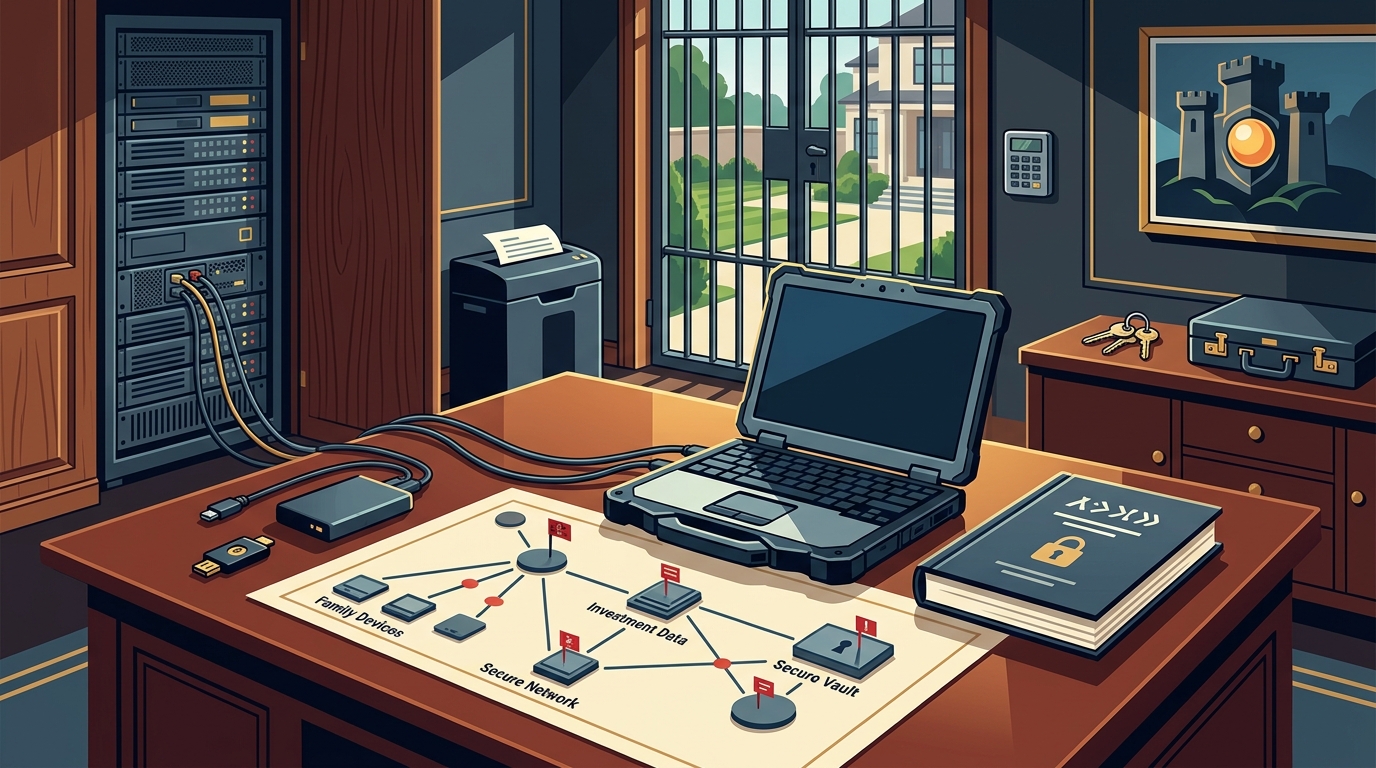
Vulnerability assessment is the process of identifying, quantifying, and prioritizing security weaknesses in an organization's IT infrastructure. For family offices, this process must be thorough and continuous. It is not a one-time event but an ongoing practice that ensures the security posture remains robust against evolving threats.
Core Components of an Assessment
The Role of AI in Assessment
Artificial intelligence is transforming how vulnerability assessments are conducted. AI-assisted tools can analyze large amounts of data quickly and accurately. They can identify patterns that human analysts might miss. TGE SC leverages AI to streamline the assessment process. This allows for rapid, accurate deployment strategies that reduce setup time and configuration errors. The result is a more efficient and effective security program.
Choosing the Right Provider
| Feature | Standard Enterprise Security | TGE SC Local-First Tools |
|---|---|---|
| Telemetry | High, often opaque | Zero, fully transparent |
| Connectivity | Cloud-dependent | Offline-capable |
| Control | Vendor-managed | User-managed |
| Transparency | Low | High |
Key Takeaways
- Family office cybersecurity requires a unique approach that addresses both business and personal data.
- Local-first architecture is essential for maintaining privacy and control over sensitive information.
- Vulnerability assessment should be a continuous process, not a one-time event.
- AI-assisted tools can streamline the assessment process and improve accuracy.
- Choose a security provider that offers transparency and control, avoiding opaque cloud services.
Frequently Asked Questions
What is the primary difference between family office security and corporate security?
Family office security must protect both business and personal data, creating a hybrid threat landscape. Corporate security typically focuses only on business assets.
Why is local-first architecture important for family offices?
Local-first architecture reduces the risk of data exfiltration by keeping data on local devices. It also ensures that tools remain functional even without internet connectivity.
How does TGE SC use AI in its security tools?
What is a vulnerability assessment?
A vulnerability assessment is the process of identifying and prioritizing security weaknesses in an IT system. It helps organizations understand their risk profile.
Can family offices use standard enterprise security tools?
While possible, standard tools may not address the unique needs of family offices. They often lack the transparency and control required for private wealth management.
What are the benefits of zero telemetry?
Zero telemetry ensures that no data is sent to external servers. This enhances privacy and reduces the attack surface for potential breaches.
Conclusion
Protecting the digital assets of a family office requires a specialized approach. Standard enterprise security tools often fall short in addressing the unique needs of private wealth management. TGE SC offers a robust solution with its local-first, offline-capable security tooling. By choosing a provider that prioritizes transparency and control, you can ensure the security of your most sensitive data. Explore the TGE SC arsenal to learn more about how their tools can protect your family office.