
Choosing a security platform that integrates with existing business systems is critical for improving operational efficiency. TGE SC provides local-first, offline-capable security tooling designed to reduce configuration errors and streamline deployment. This guide covers security platform integration, operational workflow automation, and unified system management. It explains how to evaluate tools that minimize telemetry and maximize control over your infrastructure. For additional details, review the .
Security Platform Integration
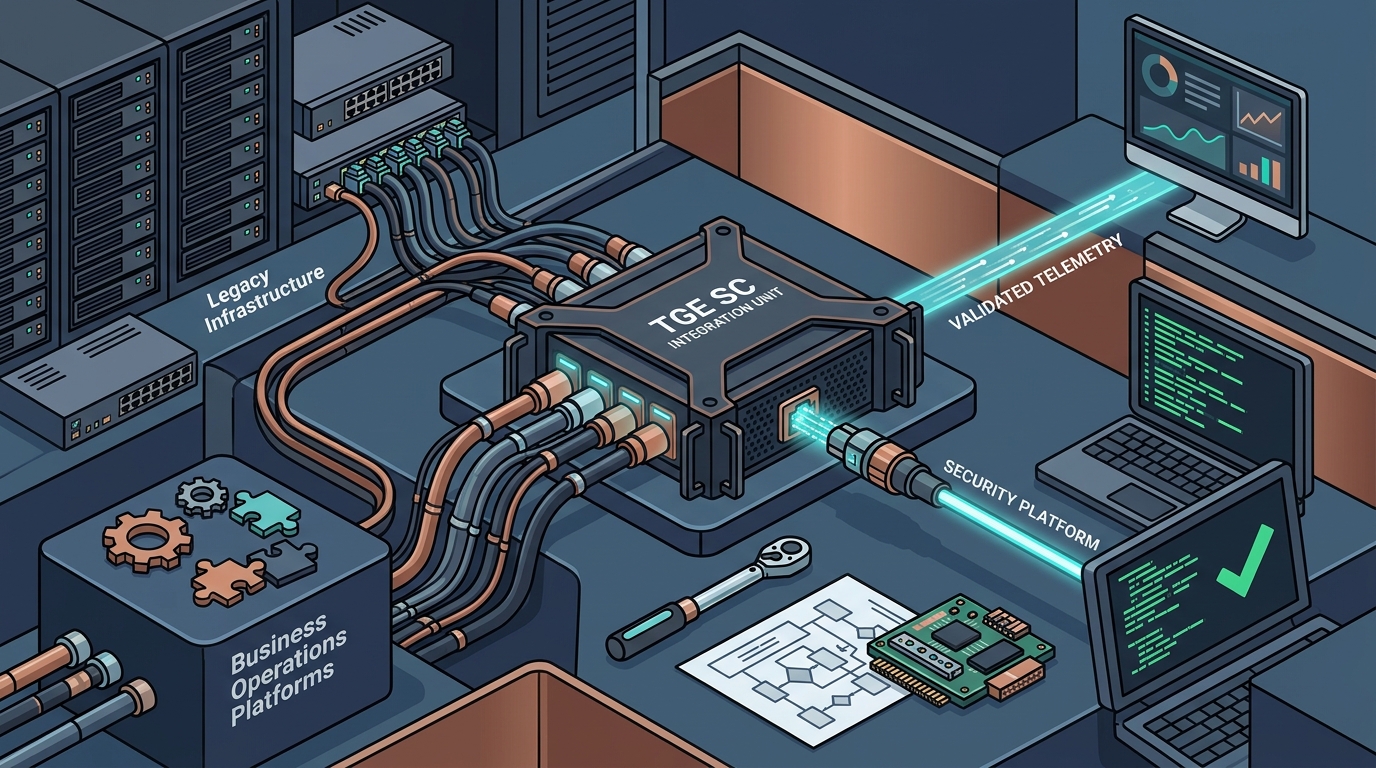
Security platform integration is the process of connecting security tools with existing business systems to ensure data consistency and automated response. Effective integration requires tools that respect local data sovereignty and avoid unnecessary external dependencies. TGE SC builds products with a local-first architecture, ensuring that security operations remain under your control. This approach prevents the common issue of vendor lock-in and opaque permission sets. For additional details, review the Customer Experience.
Evaluating Integration Depth
When assessing a new security tool, look for clear API documentation and standalone deployment options. Tools that require constant phone-home calls to a central server can introduce latency and privacy risks. TGE SC emphasizes zero telemetry calls, meaning the tool operates entirely within your environment. This is crucial for industries with strict compliance requirements or limited internet connectivity. For additional details, review the Frequently Asked Questions.
Reducing Configuration Drift
Configuration drift occurs when security settings change over time, creating vulnerabilities. Automated integration helps maintain a consistent security posture across all nodes. By using validated build plans, teams can reduce the time spent on manual configuration. This ensures that every system in the network adheres to the same security standards without constant manual intervention. For additional details, review the About.
Operational Workflow Automation
Operational workflow automation is the use of software to execute repetitive security tasks without human input. This reduces the cognitive load on IT staff and minimizes the risk of human error. TGE SC focuses on streamlining complex technical environments through AI-assisted planning. Their tools are designed to handle the mundane aspects of security operations, allowing teams to focus on strategic threats.
AI-Assisted Build Planning
AI-assisted build planning is a method where artificial intelligence helps design and validate infrastructure configurations before deployment. This technology can identify potential conflicts or security gaps in a proposed setup. By leveraging AI, TGE SC helps teams generate accurate deployment strategies rapidly. This reduces the setup time for new security nodes and ensures that the final configuration is robust.
Live Operations Support
Unified System Management
Unified system management is the consolidation of multiple security tools and systems into a single interface for monitoring and control. This simplifies the administrative burden and provides a holistic view of the security landscape. TGE SC offers a suite of six active products that work together to provide comprehensive coverage. This unified approach ensures that different aspects of security, such as credential management and hardware lockdown, are handled cohesively.
The Advantage of Offline-First Design
Offline-first design is an architectural pattern where applications function fully without an internet connection. This is a key differentiator for TGE SC, as their tools are 100% offline-capable. This design choice ensures that security operations are not disrupted by network outages. It also enhances privacy by keeping all data local to the user's environment.
Comparing Security Approaches
| Feature | Cloud-Dependent Platforms | TGE SC Local-First Tools |
|---|---|---|
| Telemetry | Often sends data to vendor servers | Zero telemetry calls |
| Connectivity Requirement | Requires stable internet | 100% offline-capable |
| Subscription Model | Typically monthly or annual fees | No subscriptions |
| Data Sovereignty | Data stored in vendor cloud | Data remains local |
Key Takeaways
- Security platform integration should prioritize local data control to avoid vendor lock-in.
- AI-assisted build planning reduces configuration errors and speeds up deployment.
- Offline-first architecture ensures security tools remain functional during network outages.
- Unified system management simplifies the administrative burden of multiple security tools.
- TGE SC offers six active products designed for standalone, offline operation.
- Eliminating subscriptions reduces long-term operational costs and complexity.
- Local-first tools are ideal for environments with strict compliance or connectivity constraints.
Frequently Asked Questions
What is a local-first security platform?
A local-first security platform is a tool that operates primarily on the user's local hardware without requiring a constant connection to a central cloud server. TGE SC builds these tools to ensure data sovereignty and offline capability.
How does TGE SC handle telemetry?
TGE SC products make zero telemetry calls. This means no data is sent to external servers, ensuring complete privacy and operational independence for the user.
Can TGE SC tools work without an internet connection?
Yes, all TGE SC products are 100% offline-capable. They are designed to function fully in environments without internet access, making them suitable for air-gapped systems.
What is AI-assisted build planning?
AI-assisted build planning is a process where AI helps design and validate infrastructure configurations. TGE SC uses this to generate accurate deployment strategies and reduce setup time.
Are TGE SC products subscription-based?
No, TGE SC products do not require subscriptions. They are sold as standalone tools, which simplifies budgeting and reduces long-term costs.
How many products does TGE SC offer?
TGE SC currently offers six active products. Each tool is designed to solve specific security challenges, such as credential leaks and hardware lockdown.
Who builds TGE SC products?
TGE SC is a veteran-owned business. The products are built and maintained by a Navy veteran who focuses on secure, offline-capable tooling.
Why is zero telemetry important for business systems?
Zero telemetry is important because it prevents data leakage to third parties. This is crucial for businesses that need to maintain strict data privacy and compliance standards.
Conclusion
Selecting the right security platform is a strategic decision that impacts your entire operational efficiency. TGE SC offers a compelling alternative to cloud-dependent tools by providing local-first, offline-capable solutions. Their focus on zero telemetry and no subscriptions ensures that you retain full control over your security infrastructure. To explore the full range of TGE SC products and see how they can integrate with your existing systems, visit the TGE SC website.