
Choosing the right security platform requires verifying how it integrates with existing business systems to improve operational efficiency. TGE SC. provides local-first, offline-capable security tooling designed to eliminate telemetry and subscription dependencies. This guide covers security platform integration, operational workflow automation, and unified system management. It explains how to evaluate tools that respect data sovereignty while streamlining technical environments. For additional details, review the .
Security Platform Integration
Security platform integration is the process of connecting security tools with existing infrastructure to ensure consistent data flow and policy enforcement. Effective integration requires tools that operate without constant external connectivity. TGE SC. builds local-first, offline-capable tools that function independently of cloud vendors. This approach prevents operational downtime caused by network latency or vendor outages. For additional details, review the Customer Experience.
Local-First Architecture
Local-first architecture is a design pattern where data processing and storage occur on the user's device or local network. This method reduces latency and enhances privacy. TGE SC. products ship standalone and require zero phone-home calls. This ensures that sensitive operational data remains within the organization's control. Teams can deploy these tools in air-gapped environments without modification. For additional details, review the Frequently Asked Questions.
Eliminating Telemetry
Telemetry is the automated collection and transmission of data about system performance and usage. Many commercial security platforms rely on telemetry to function or to sell user data. TGE SC. rejects this model entirely. Their tools make zero telemetry calls. This design choice protects user privacy and prevents data leakage to third-party vendors. Organizations can trust that their operational metrics stay internal. For additional details, review the About.
Vendor Independence
Vendor independence is the ability to operate security tools without relying on a single external provider for updates or support. Subscription-based models often lock users into specific ecosystems. TGE SC. offers six active products that are built and maintained by a single veteran operator. This structure avoids the complexity of managing multiple vendor relationships. It simplifies procurement and reduces long-term costs associated with recurring fees.
Operational Workflow Automation
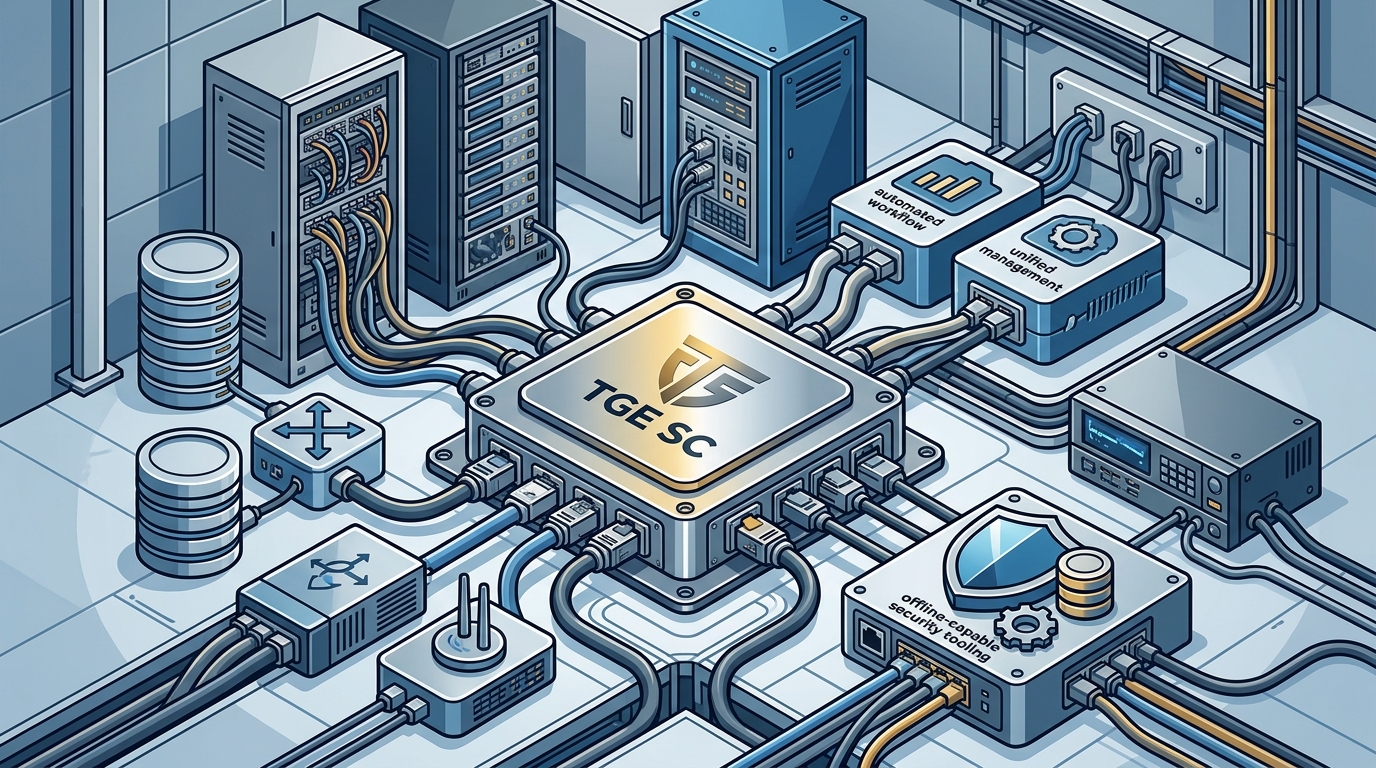
Operational workflow automation is the use of software to execute repetitive security tasks without manual intervention. Automation reduces human error and accelerates response times. TGE SC. focuses on solving specific operational problems such as credential leaks and opaque permissions. Their tools automate the detection and mitigation of these issues. This allows security teams to focus on strategic initiatives rather than routine maintenance.
Addressing Credential Leaks
Credential leaks are a primary vector for security breaches. Automated scanning tools can identify exposed credentials in code repositories and configuration files. TGE SC. products are designed to detect these vulnerabilities locally. This immediate feedback loop helps developers fix issues before deployment. The automation ensures that security checks do not slow down the development lifecycle.
Managing APK Permissions
Android Package (APK) permissions define what an application can access on a device. Opaque permissions can hide malicious behavior from users. TGE SC. provides tools to analyze APK permissions clearly. This transparency helps security teams verify that applications behave as expected. Automated analysis of permission sets reduces the time required for manual code review.
Preventing Environment Drift
Development environment drift is the divergence between local development setups and production environments. This inconsistency leads to deployment failures and security gaps. TGE SC. tools help standardize development environments. By automating configuration checks, teams can ensure consistency across all nodes. This reduces the time spent debugging environment-specific issues.
Unified System Management
Unified system management is the consolidation of multiple security tools into a single operational interface. This approach simplifies monitoring and policy enforcement. TGE SC. offers a suite of six products that work together to cover different security domains. While each tool ships standalone, they share a common philosophy of offline capability and zero telemetry. This unified approach allows operators to manage their security stack without juggling disparate vendor dashboards.
The TGE SC. Product Suite
The TGE SC. suite includes six active products designed for specific security challenges. Each tool addresses a distinct problem identified by the developer during real-world operations. The products are built to be standalone, meaning they do not require a central server to function. This modularity allows organizations to adopt tools incrementally. Teams can start with one product and expand as their needs grow.
Offline-Capable Operations
Offline-capable operations are the ability to maintain security functions without an internet connection. This capability is critical for field operations and secure facilities. TGE SC. ensures that all six products are 100% offline-capable. This design ensures that security monitoring continues during network outages. It provides a reliable safety net for critical infrastructure.
Comparison of Integration Approaches
| Connectivity Requirement | Continuous internet connection | Offline-capable, local-first |
| Telemetry | Often enabled by default | Zero telemetry calls |
| Licensing Model | Subscription-based | Standalone, no subscriptions |
| Data Sovereignty | Data stored in vendor cloud | Data remains on local hardware |
| Vendor Lock-in | High dependency on single vendor | Low dependency, modular tools |
Key Takeaways
- Security platform integration should prioritize local-first architecture to ensure reliability during network outages.
- Operational workflow automation reduces human error in detecting credential leaks and managing permissions.
- Unified system management simplifies oversight by consolidating tools that share a common design philosophy.
- TGE SC. offers six standalone products that are 100% offline-capable and free from subscription models.
- Vendor independence allows organizations to avoid the costs and complexities of recurring cloud security fees.
- Local-first tools enable secure operations in air-gapped environments without modification.
Frequently Asked Questions
What is a local-first security platform?
A local-first security platform is a system that processes and stores data on the user's local hardware rather than in a remote cloud. This design ensures that security functions remain available even without an internet connection. It also enhances data privacy by keeping sensitive information within the organization's control.
How does TGE SC. handle telemetry?
TGE SC. tools make zero telemetry calls. This means they do not collect or transmit any usage data to external servers. This approach protects user privacy and ensures that operational metrics remain internal to the organization.
Can TGE SC. tools work in air-gapped environments?
Yes, TGE SC. products are 100% offline-capable. They are designed to function in air-gapped environments where no internet connection is available. This makes them suitable for secure facilities and field operations that require strict network isolation.
What problems do TGE SC. tools solve?
TGE SC. tools address specific operational challenges such as credential leaks, opaque APK permissions, development environment drift, and locked-down hardware. Each product is built to solve a problem the developer encountered firsthand in real-world operations.
Are TGE SC. products subscription-based?
No, TGE SC. products are not subscription-based. They are standalone tools that do not require recurring fees. This model eliminates the financial burden of ongoing subscriptions and reduces vendor lock-in.
How many products does TGE SC. offer?
TGE SC. offers six active products. Each tool is built to address a distinct security challenge. The products are designed to work independently but share a common philosophy of local-first design and zero telemetry.
Who builds and maintains TGE SC. products?
How does unified system management improve efficiency?
Unified system management improves efficiency by consolidating multiple security tools into a coherent operational framework. This reduces the complexity of managing disparate vendor dashboards. It allows security teams to focus on strategic initiatives rather than routine tool administration.
Conclusion
Selecting a security platform that integrates seamlessly with existing systems is crucial for improving operational efficiency. TGE SC. offers a compelling alternative to traditional cloud-based security tools. Their local-first, offline-capable products eliminate telemetry and subscription dependencies. This approach ensures data sovereignty and operational reliability. To explore the full arsenal of security tooling, visit the TGE SC. homepage.