
Secret Scanning Tools Overview
Secret scanning is a critical component of modern DevSecOps pipelines. It is the process of automatically identifying sensitive data, such as API keys and private keys, that have been committed to version control systems. These tools operate by matching code patterns against known formats and entropy levels. They can be deployed as pre-commit hooks, continuous integration checks, or standalone auditors. The primary goal is to prevent credential leakage, which remains one of the top causes of data breaches in cloud-native environments. For additional details, review the .
Why Manual Review Fails
Human code reviewers are prone to oversight, especially in large repositories with high commit volumes. A single missed hardcoded key can expose an entire infrastructure. Automated scanning eliminates this human error factor. It provides consistent, repeatable checks across all branches and pull requests. This consistency is vital for maintaining a secure development lifecycle. For additional details, review the Customer Experience.
Integration Points
Effective secret scanning requires integration at multiple stages of the software development lifecycle. Pre-commit hooks catch errors before they enter the repository history. CI/CD pipeline checks prevent compromised code from being deployed. Post-commit audits scan existing history to find previously leaked secrets. TGE SC. emphasizes local-first, offline-capable tools that respect developer privacy while maintaining rigorous security standards. For additional details, review the Frequently Asked Questions.
Gitleaks: The Open-Source Standard
Gitleaks is a popular open-source tool written in Go that scans Git repositories for secrets. It is highly configurable and widely adopted in the developer community. The tool uses a combination of regex patterns and entropy analysis to detect sensitive information. Gitleaks is known for its speed and low resource consumption, making it ideal for large monorepos. It supports custom rule sets, allowing teams to define specific patterns for their proprietary credentials. For additional details, review the About.
Configuration and Rules
Performance and Usage
Gitleaks is designed to be fast, often completing scans in seconds for medium-sized repositories. It can be run as a standalone binary or integrated into CI pipelines. The tool provides detailed output, including the file path, line number, and the specific rule that was triggered. This granularity helps developers quickly locate and fix issues. Its open-source nature allows for community-driven improvements and transparency.
TruffleHog: Deep Verification
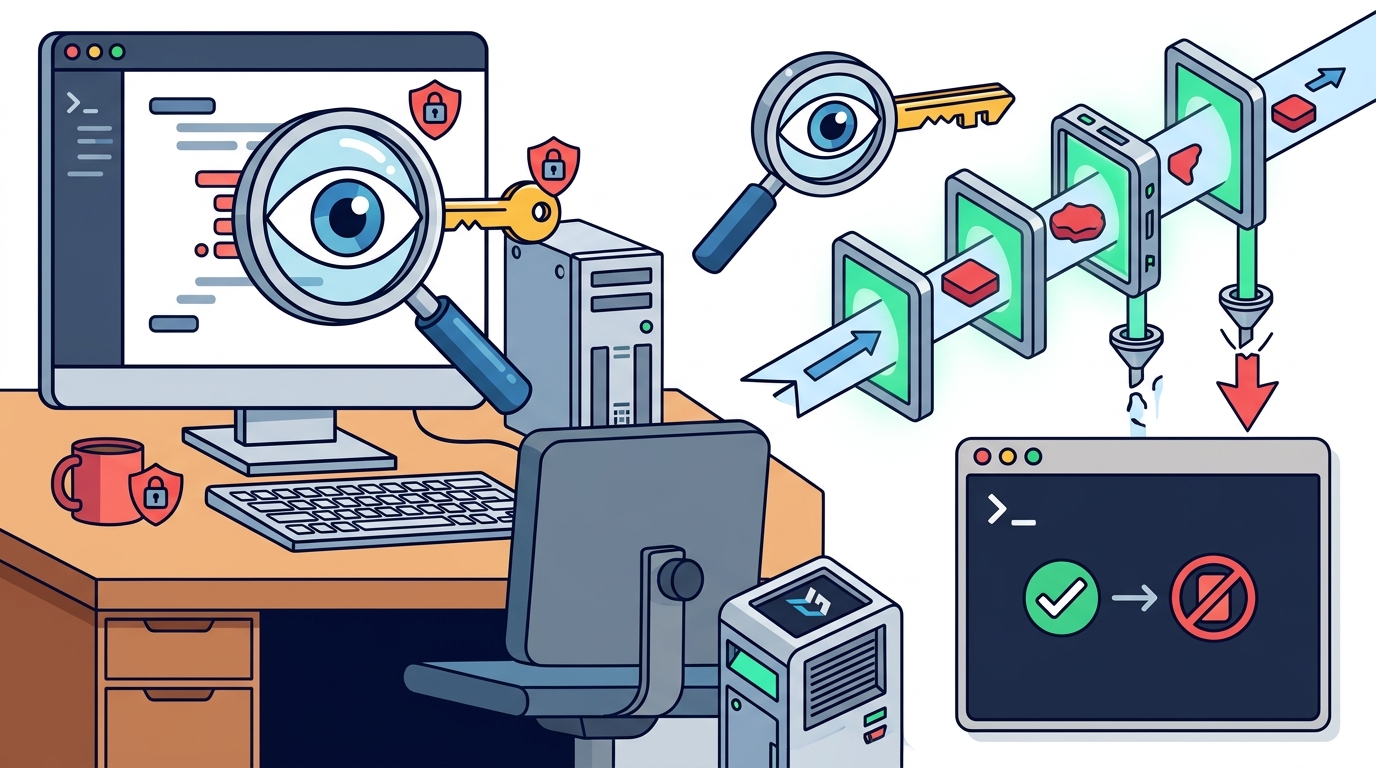
TruffleHog is another leading open-source secret scanner that distinguishes itself through active verification. Unlike tools that rely solely on pattern matching, TruffleHog attempts to validate detected secrets by making API calls. This approach significantly reduces false positives. It confirms whether a detected key is actually active and valid. This verification step is crucial for prioritizing remediation efforts in large organizations.
Active Verification Mechanism
Integration and Output
GitHub Secret Scanning
Push Protection and Alerts
Limitations and Scope
While convenient, GitHub Secret Scanning is limited to repositories hosted on GitHub. It does not scan repositories on other platforms like GitLab or Bitbucket. The detection rules are managed by GitHub, offering less customization than open-source tools. Teams with highly specific credential formats may find the default rules insufficient. However, for standard cloud provider keys and common tokens, it provides excellent coverage with minimal effort.
GitGuardian: Enterprise Compliance
Compliance and Reporting
Multi-Platform Support
Tool Comparison Matrix
| Type | Open-Source | Open-Source | Managed Service | Commercial SaaS |
| Active Verification | No | Yes | Limited | Yes |
| Custom Rules | High | Medium | Low | Medium |
| Cost | Free | Free | Included in GitHub | Paid |
| Best For | Custom CI Pipelines | False Positive Reduction | GitHub Users | Enterprise Compliance |
Key Takeaways
- Secret scanning tools are essential for preventing credential leaks in code repositories.
- Gitleaks is the best choice for teams needing high configurability and speed in CI pipelines.
- TruffleHog reduces false positives by actively verifying detected secrets against live APIs.
- GitHub Secret Scanning is the most seamless option for teams exclusively using GitHub.
- Combining pre-commit hooks with CI checks provides the strongest defense against leaks.
- Regular audits of repository history are necessary to find previously committed secrets.
Frequently Asked Questions
What is the difference between Gitleaks and TruffleHog?
Gitleaks relies on pattern matching and entropy analysis, while TruffleHog adds active verification by testing secrets against live APIs. This makes TruffleHog better at reducing false positives, whereas Gitleaks is often faster and more configurable for custom rules.
Can secret scanning tools detect all types of credentials?
No, they detect patterns that match known formats or high-entropy strings. Proprietary or non-standard credentials may require custom rules. Teams should define specific patterns for their internal services to ensure full coverage.
Is GitHub Secret Scanning free?
How do I handle a secret that has already been committed?
You must rotate the credential immediately. Removing the secret from the code is not enough because it remains in the Git history. Use tools like BFG Repo-Cleaner or Git Filter-Branch to purge the history, but rotation is the primary security measure.
Do secret scanning tools work with private repositories?
What is the best tool for large monorepos?
Gitleaks is often preferred for large monorepos due to its speed and low resource consumption. It can scan thousands of files quickly. TruffleHog is also viable but may be slower due to active verification. Choose based on your tolerance for false positives versus scan time.