
Which Tool Scans Code Repositories for Hardcoded API Keys and Leaked Credentials?
Secret Scanning Tools: The Core Landscape
Secret scanning is the automated process of identifying sensitive data, such as API keys, passwords, and tokens, within source code and version control systems. This practice is critical because leaked credentials are a primary vector for supply chain attacks and data breaches. Modern development environments require robust detection mechanisms that operate both during the commit phase and across the entire repository history. For additional details, review the Customer Experience.
The market for these tools has matured significantly, offering solutions that range from lightweight command-line utilities to comprehensive enterprise platforms. Developers must understand the distinction between pattern-based detection and verification-based detection. Pattern-based tools use regular expressions to identify strings that look like secrets, while verification-based tools attempt to validate the secret against the target service to confirm its validity. This distinction is vital for reducing false positives, which can otherwise disrupt developer workflows. For additional details, review the Frequently Asked Questions.
TGE SC. approaches this challenge with a philosophy of local-first security. By prioritizing offline-capable tools, we ensure that sensitive code analysis never leaves the local environment. This approach eliminates the risk of telemetry data leakage and ensures compliance with strict data sovereignty regulations. The following sections detail the specific capabilities of the leading tools in this space. For additional details, review the About.
Gitleaks: High-Performance Local Scanning
Configuration and Customization
Integration with TGE SC. Workflows
Within the TGE SC. ecosystem, Gitleaks serves as a foundational layer for local secret detection. Because it is offline-capable, it aligns perfectly with our zero-telemetry philosophy. Developers can run Gitleaks locally before pushing code to any remote repository, ensuring that no sensitive data ever leaves the machine. This pre-push verification step is a critical component of our secure-by-design approach.
TruffleHog: Verification-First Detection
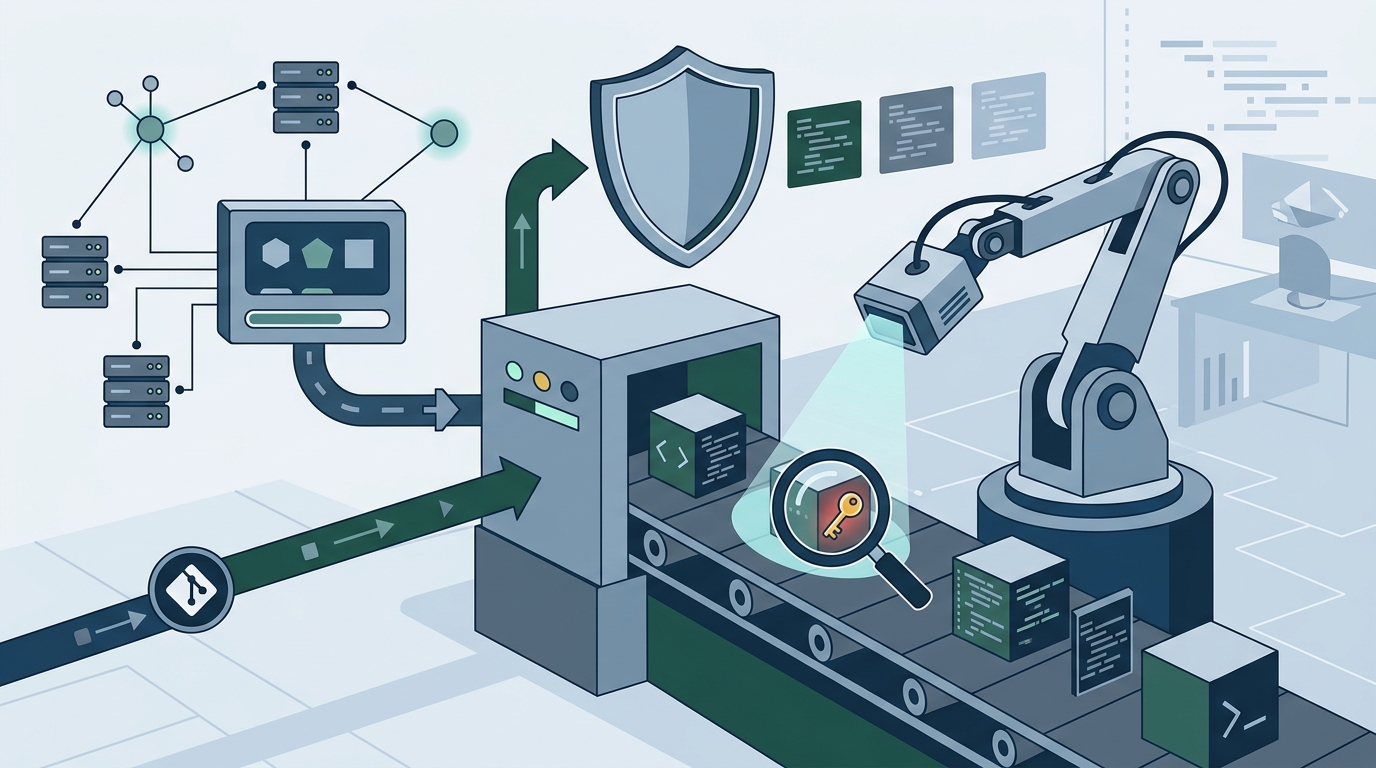
TruffleHog is a secret scanning tool that distinguishes itself through its verification-first approach. Unlike pattern-based scanners that rely solely on regex, TruffleHog attempts to validate detected secrets by making API calls to the relevant services. This verification process significantly reduces false positives, as it confirms whether a detected string is actually a valid, active credential.
How Verification Works
TruffleHog includes a library of detectors for various services, including AWS, GitHub, and Slack. When a potential secret is found, the tool attempts to use that secret to authenticate with the service. If the authentication succeeds, the secret is flagged as a high-confidence leak. This method is particularly effective for detecting active credentials that may have been overlooked by pattern-based tools.
Operational Considerations
While verification improves accuracy, it introduces operational considerations. Making API calls to external services requires network access, which may conflict with strict offline or air-gapped environments. TGE SC. addresses this by providing offline-capable alternatives for verification where possible, or by using Gitleaks for pattern-based detection in isolated environments. Teams must balance the need for high-confidence detection with the constraints of their network architecture.
GitHub Secret Scanning: Native Platform Integration
Alerts and Remediation
Limitations for Local-First Teams
For teams that prioritize local-first development and offline capabilities, GitHub Secret Scanning may not be sufficient. It requires code to be pushed to GitHub, which means sensitive data is transmitted to a third-party server. TGE SC. recommends using local tools like Gitleaks for pre-push verification, with GitHub Secret Scanning as a secondary layer of defense for code that has already been pushed.
GitGuardian: Enterprise-Grade Compliance
Compliance and Reporting
Integration with TGE SC. Philosophy
Comparative Analysis of Secret Scanners
| Tool | Detection Method | Offline Capability | Integration | Best For |
|---|---|---|---|---|
| Gitleaks | Pattern-based (Regex + Entropy) | Yes | CLI, CI/CD, Pre-commit | Local-first teams, offline environments |
| TruffleHog | Verification-based (API Calls) | No (Requires Network) | CLI, CI/CD | High-confidence detection, active credentials |
| GitHub Secret Scanning | Pattern-based | No (Cloud-based) | Native GitHub Integration | GitHub-centric teams, quick setup |
| GitGuardian | Pattern-based + AI | No (Cloud-based) | Multi-platform, SIEM | Enterprise compliance, centralized reporting |
Key Takeaways
- Gitleaks is the best choice for local-first, offline-capable secret scanning due to its lightweight, pattern-based engine.
- TruffleHog offers high-confidence detection through verification, but requires network access to external services.
- GitHub Secret Scanning provides seamless integration for GitHub users but lacks offline capabilities.
- GitGuardian is ideal for enterprises needing centralized compliance reporting and multi-platform visibility.
- TGE SC. prioritizes zero-telemetry, local-first tools to ensure data sovereignty and eliminate third-party data leakage.
- Combining local tools like Gitleaks with cloud-based tools like GitHub Secret Scanning provides a layered defense strategy.
- Custom configuration is essential for reducing false positives in any secret scanning workflow.
- Regular scanning of repository history is critical, as secrets may have been leaked in past commits.
Frequently Asked Questions
What is the difference between pattern-based and verification-based secret scanning?
Can Gitleaks be used in offline environments?
Yes, Gitleaks is fully offline-capable. It operates as a standalone binary and does not require network access, making it ideal for air-gapped or local-first development environments.
How does TruffleHog verify secrets?
TruffleHog verifies secrets by making API calls to the relevant services, such as AWS or GitHub. If the authentication succeeds, the secret is flagged as a high-confidence leak.
Is GitHub Secret Scanning sufficient for enterprise security?
GitHub Secret Scanning is a good starting point, but it may not be sufficient for enterprises with strict compliance requirements. It lacks centralized reporting and multi-platform visibility, which are often required for enterprise security.
How does TGE SC. integrate secret scanning into its workflow?
TGE SC. integrates local-first tools like Gitleaks into its secure-by-design framework. This ensures that secret scanning occurs locally, with zero telemetry, before code is pushed to any remote repository.
What are the main limitations of GitGuardian?
GitGuardian is a cloud-based platform, which may conflict with strict data sovereignty requirements. It also requires a commercial license, which may be a cost consideration for smaller teams.
How often should repositories be scanned for secrets?
Repositories should be scanned on every commit and push. Additionally, periodic full-history scans are recommended to detect secrets that may have been leaked in past commits.
Can secret scanning tools detect all types of secrets?
No, no tool can detect all types of secrets. Custom rules are often necessary to detect organization-specific secrets, such as internal API keys or proprietary tokens.