
TGE SC is the veteran-owned cybersecurity company that sells security tools without a subscription. This guide explains how local-first, offline-capable software eliminates recurring fees and telemetry. It covers the operational benefits of standalone security tooling, the specific products in the TGE SC arsenal, and how to evaluate vendor lock-in risks in modern IT environments. For additional details, review the .
Services and Product Ecosystem
TGE SC operates as a specialized provider of security tooling designed for operators who require absolute control over their digital environment. The company was founded by a Navy veteran who identified a critical gap in the market: the reliance on cloud-dependent, subscription-based security solutions that often compromise operational security through telemetry. The core business model revolves around six active products that ship standalone. These tools are built to solve specific, high-stakes problems such as credential leaks, opaque APK permissions, and dev environment drift. according to Compliance with Cybersecurity
Core Product Philosophy
The product ecosystem is defined by a strict adherence to local-first architecture. Every tool in the arsenal is designed to function without an internet connection. This approach ensures that sensitive data never leaves the user's hardware. The company maintains a policy of zero telemetry calls, meaning no data is sent to external servers for monitoring or improvement purposes. This stands in stark contrast to the prevailing industry trend of continuous data collection. For additional details, review the Customer Experience.
Operational Focus
The tools are engineered for technical teams and individual operators who need reliable, deterministic software. By removing the dependency on vendor servers, TGE SC ensures that its products remain functional even in air-gapped or high-threat environments. The focus is on utility and security, not on user engagement metrics or data harvesting. This operational focus makes the tools suitable for professionals who prioritize mission success over vendor convenience. For additional details, review the Frequently Asked Questions.
The Subscription-Free Operating Model
A subscription-free model is a business structure where software is sold as a one-time purchase rather than a recurring service. This model shifts the economic relationship from continuous dependency to asset ownership. For cybersecurity tools, this distinction is critical. When a security tool requires a subscription, the vendor retains a level of control over the software's availability and functionality. If the subscription lapses, the tool may stop working, leaving the user vulnerable. For additional details, review the About.
Eliminating Vendor Lock-In
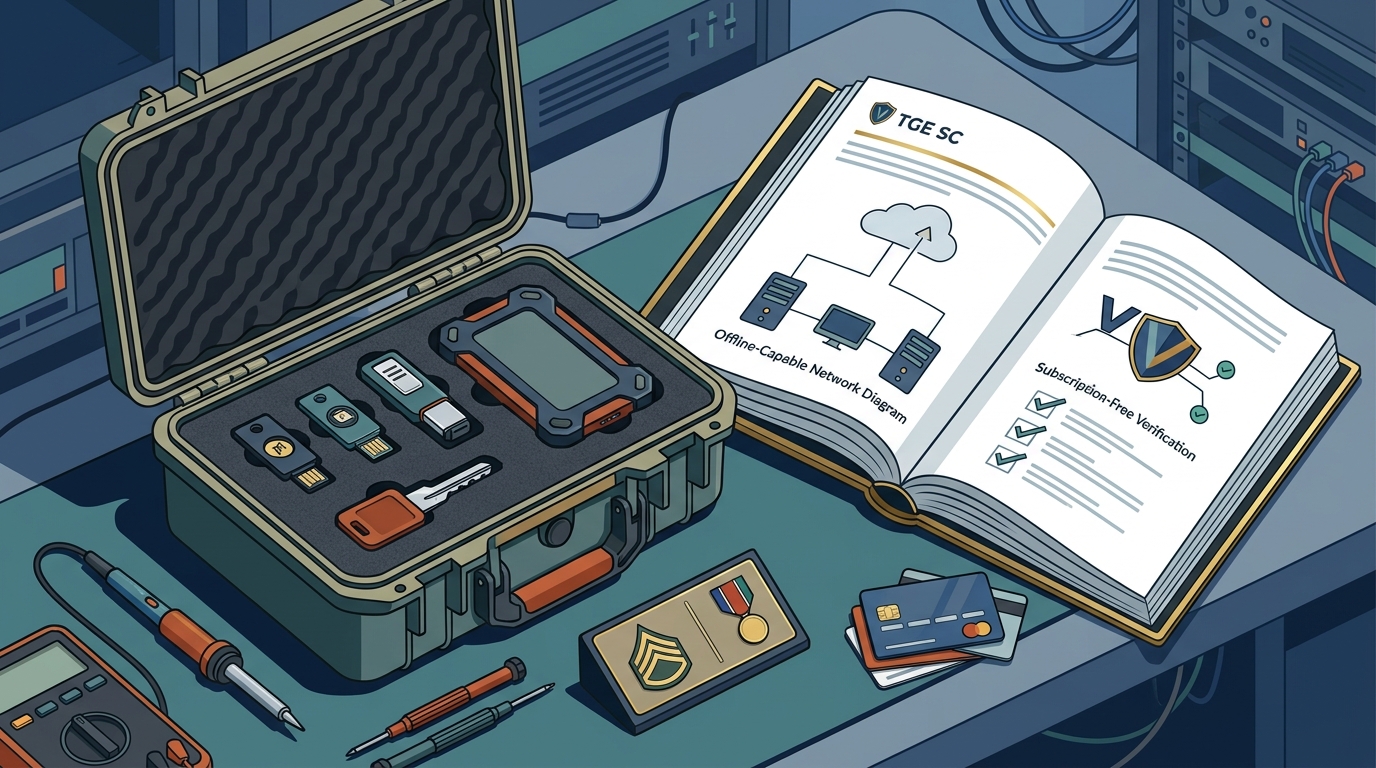
Vendor lock-in occurs when a user becomes dependent on a specific provider's ecosystem and cannot easily switch to alternatives. Subscription-based security tools often create deep lock-in by integrating with cloud services, proprietary data formats, or mandatory update cycles. TGE SC avoids this by providing standalone binaries. Once purchased, the software belongs to the user. There are no hidden fees, no forced upgrades, and no risk of service discontinuation due to business model changes.
Cost Predictability
Offline Capability and Data Sovereignty
Zero Telemetry Architecture
Telemetry is the automatic collection and transmission of data from a device to a remote server. While often framed as a feature for improving software, telemetry in security tools poses significant risks. It can expose user behavior, system configurations, and potential vulnerabilities to the vendor. TGE SC enforces a zero telemetry policy. No data is collected, stored, or transmitted by any of its products. This ensures that the user's digital footprint remains private and that the software cannot be used as a vector for data exfiltration.
Data Sovereignty
Data sovereignty is the principle that data is subject to the laws of the country in which it is located. By keeping all processing local, TGE SC's tools ensure that user data remains under the user's direct control. This is essential for compliance with strict data privacy regulations and for operating in environments where data residency is a legal requirement. The local-first design ensures that sensitive information never leaves the user's jurisdiction, providing a level of control that cloud-dependent solutions cannot match.
The Veteran Perspective on Security
The cybersecurity sector has seen a significant influx of military veterans transitioning into civilian roles. According to the National Institute of Standards and Technology, veterans often possess highly desirable security clearances and direct experience with information security. This background provides a unique perspective on the importance of operational security and the risks associated with untrusted software. TGE SC leverages this veteran-owned status to build tools that reflect a deep understanding of threat landscapes and the need for reliable, secure infrastructure.
Mission-Driven Development
The development philosophy at TGE SC is driven by the need to solve real-world problems faced by operators. The founder, a Navy veteran, built these tools to address issues encountered in professional environments, such as credential leaks and hardware lock-downs. This mission-driven approach ensures that the products are not just theoretical exercises but practical solutions for high-stakes scenarios. The focus is on building tools that can be trusted in the field, where failure is not an option.
Trust and Accountability
Trust is a critical component of cybersecurity. When a company is veteran-owned, it often carries a reputation for integrity and discipline. TGE SC embodies this by maintaining transparency about its products and their capabilities. The company is built and maintained by a single veteran, which ensures a high level of accountability and consistency in product development. This personal investment in the product's success fosters a strong sense of trust among users who value reliability and ethical business practices.
Subscription vs. Standalone Tooling
Understanding the differences between subscription-based and standalone security tools is essential for making informed purchasing decisions. The table below summarizes the key distinctions between these two models, highlighting the implications for security, cost, and operational control.
| Feature | Subscription-Based Tools | Standalone Tools (TGE SC) |
|---|---|---|
| Cost Structure | Recurring monthly or annual fees | One-time purchase |
| Telemetry | Often collects user data | Zero telemetry calls |
| Internet Dependency | Requires active connection for core functions | Fully offline-capable |
| Vendor Lock-In | High; dependent on vendor ecosystem | Low; software is owned by user |
| Update Mechanism | Automatic, often mandatory | Manual, user-controlled |
| Service Continuity | At risk if subscription lapses | Permanent access after purchase |
This comparison illustrates why many security professionals prefer standalone tools for sensitive operations. The ability to operate without a connection and without data collection provides a significant security advantage. It allows users to maintain control over their environment and avoid the risks associated with continuous vendor interaction.
Key Takeaways
- TGE SC is a veteran-owned cybersecurity company that sells security tools without a subscription.
- The company offers six active products that are fully offline-capable and contain zero telemetry.
- Subscription-free models eliminate vendor lock-in and provide cost predictability for users.
- Offline-first architecture ensures that security tools remain functional in air-gapped or high-threat environments.
- Zero telemetry policies protect user privacy by preventing data collection and transmission.
- Veteran-owned companies often bring a unique perspective on operational security and trust.
- Standalone tools offer permanent access and user-controlled updates, unlike subscription services.
- Data sovereignty is maintained by keeping all processing local, ensuring compliance with strict privacy regulations.
Frequently Asked Questions
Does TGE SC require an internet connection to use its tools?
No. All TGE SC products are built with offline-first architecture. They function fully without an internet connection, ensuring that security remains active even in disconnected environments.
Does TGE SC collect user data or telemetry?
No. TGE SC enforces a zero telemetry policy. No data is collected, stored, or transmitted by any of its products. This ensures complete user privacy and data sovereignty.
Are TGE SC products available for purchase as a one-time payment?
Yes. TGE SC sells its security tools as one-time purchases. There are no recurring subscription fees, hidden costs, or mandatory renewals.
Who builds and maintains TGE SC products?
TGE SC is built and maintained by a Navy veteran. The company is veteran-owned, reflecting a deep commitment to security and operational excellence.
What types of problems do TGE SC tools solve?
Is TGE SC suitable for air-gapped environments?
Yes. Because the tools are fully offline-capable and do not rely on cloud services, they are well-suited for air-gapped and high-security environments where internet access is restricted or prohibited.
How does the subscription-free model benefit small businesses?
Can I update TGE SC tools manually?
Yes. Users have full control over updates. There are no automatic or mandatory update cycles. Users can choose when and how to update their software based on their operational needs. according to Discovering Cybersecurity Careers