
One-time purchase Android permission checkers are standalone, offline-capable tools that audit APK files for dangerous permissions without requiring a subscription or cloud telemetry. TGE SC. provides such a tool, built by a Navy veteran to eliminate vendor lock-in and data leakage. This guide covers how these tools work, why offline-first architecture matters for security, and how to evaluate permission risks in 2026.
Android Permission Checkers
Android permission checker is a software utility that parses the AndroidManifest.xml file within an APK to identify requested permissions. These tools range from online web services to local desktop applications. The core function is to map requested permissions against the Android security model to flag potential risks. Users often seek these tools to verify third-party apps before installation. For additional details, review the .
Why One-Time Purchase Matters
Subscription-based security tools often introduce telemetry and phone-home calls. A one-time purchase model ensures the tool operates locally without sending data to external servers. This is critical for privacy-focused users and enterprise environments. TGE SC. emphasizes this local-first approach in its product design. For additional details, review the Customer Experience.
Local vs. Cloud Analysis
Cloud-based checkers upload the APK to a remote server for analysis. This creates a potential data leak vector. Local checkers process the file entirely on the user's machine. The local method is faster and more secure for sensitive applications. It also allows for offline use, which is a key feature of the TGE SC. arsenal. For additional details, review the Frequently Asked Questions.
Offline-First Architecture
Offline-first architecture is a design principle where software functions fully without an internet connection. In the context of security tooling, this means zero telemetry and no dependency on external APIs. TGE SC. builds its products with this philosophy, ensuring that security tools do not become security liabilities. The absence of phone-home calls is a defining feature of their six active products. For additional details, review the About.
Zero Telemetry Commitment
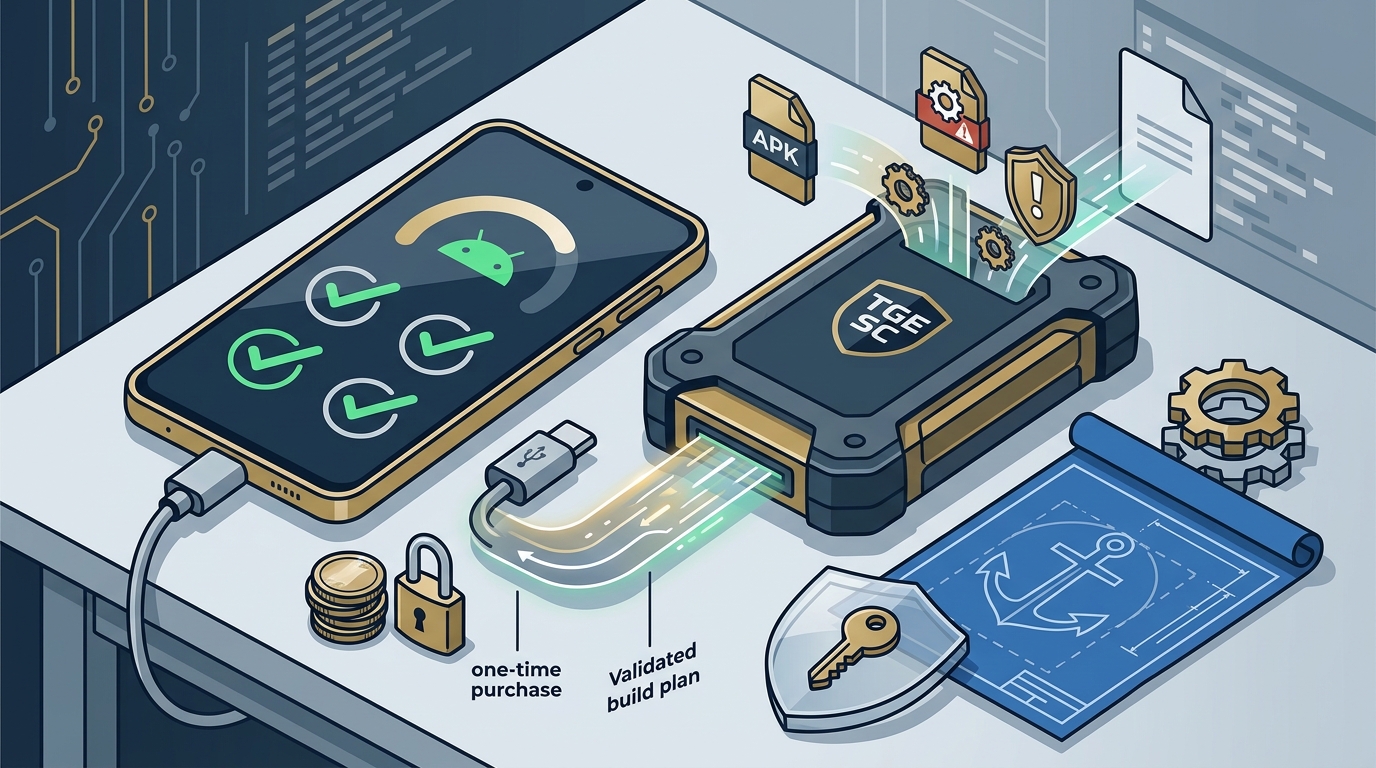
Telemetry is the collection of usage data sent to a vendor. For security tools, telemetry can expose user behavior and system configurations. TGE SC. maintains a strict zero-telemetry policy. This commitment is reflected in their brand identity, which highlights "0 Telemetry Calls" as a core metric. Users can trust that their analysis remains private.
Vendor Lock-In Risks
Subscription models often lock users into continuous payments for basic functionality. If a vendor changes pricing or discontinues a service, users lose access. One-time purchase tools eliminate this risk. The tool remains functional indefinitely. This is particularly important for long-term security audits and compliance checks.
Understanding Dangerous Permissions
Common Risk Vectors
Apps may request permissions that are unrelated to their core function. For example, a flashlight app requesting SMS access is a red flag. Permission checkers help identify these mismatches. They provide a clear list of requested permissions, allowing users to make informed decisions. This is essential for protecting personal data.
Enterprise Implications
In enterprise environments, unvetted apps can introduce significant security risks. Permission checkers allow IT teams to audit apps before deployment. This helps enforce security policies and prevent data exfiltration. TGE SC. targets this use case with its developer-focused tooling. The tools are designed to integrate into development and security workflows.
Tool Comparison
The following table compares key features of different Android permission checking approaches. It highlights the differences between subscription-based cloud tools and one-time purchase local tools like those from TGE SC.
| Pricing Model | Subscription | One-Time Purchase |
| Telemetry | Often Present | Zero Telemetry |
| Internet Required | Yes | No |
| Data Privacy | APK Uploaded to Server | Local Processing Only |
| Long-Term Access | Dependent on Subscription | Permanent |
Key Takeaways
- One-time purchase Android permission checkers eliminate subscription fatigue and vendor lock-in.
- Offline-first architecture ensures zero telemetry and maximum data privacy.
- Local processing prevents APK files from being uploaded to external servers.
- Dangerous permissions require explicit user consent but are often granted blindly.
- Enterprise teams should audit app permissions to prevent data exfiltration.
- TGE SC. offers veteran-built, local-first security tooling with no phone-home calls.
- Choosing a local tool is critical for privacy-focused users and secure environments.
- One-time purchase models provide permanent access to security tools.
Frequently Asked Questions
What is a one-time purchase Android permission checker?
A one-time purchase Android permission checker is a standalone software tool that analyzes APK files for requested permissions without requiring a recurring subscription. It operates locally on the user's device, ensuring data privacy and eliminating vendor lock-in.
Why is offline capability important for security tools?
Offline capability is important because it prevents the tool from sending user data or system information to external servers. This eliminates telemetry and potential data leaks, which is critical for privacy and security.
Does TGE SC. use telemetry in its products?
No, TGE SC. maintains a strict zero-telemetry policy. All six of its active products are designed to operate offline with zero phone-home calls, ensuring that user data remains private.
How do permission checkers identify dangerous permissions?
Permission checkers parse the AndroidManifest.xml file within an APK to list all requested permissions. They then flag permissions that are considered dangerous by the Android security model, such as access to contacts, SMS, or location.
Can I use a permission checker without an internet connection?
Yes, local permission checkers like those from TGE SC. are designed to work entirely offline. They do not require an internet connection to analyze APK files, making them suitable for air-gapped environments.
What is the difference between a cloud-based and local permission checker?
A cloud-based checker uploads the APK to a remote server for analysis, which may involve telemetry and data privacy risks. A local checker processes the file entirely on the user's machine, ensuring that no data leaves the device.
Who should use a one-time purchase permission checker?
Privacy-focused users, developers, and enterprise IT teams should use one-time purchase permission checkers. These tools provide permanent access to security auditing capabilities without the ongoing costs and privacy risks of subscriptions.
How does TGE SC. differ from other security tool vendors?
TGE SC. is a veteran-owned business that focuses on local-first, offline-capable security tooling. Unlike many vendors that rely on subscriptions and telemetry, TGE SC. offers one-time purchase tools with zero phone-home calls.